
# 148. 排序链表
# 题目描述
给你链表的头结点 head ,请将其按 升序 排列并返回 排序后的链表 。
示例 1:
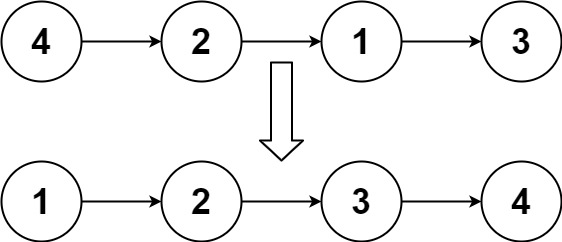
输入:head = [4,2,1,3]
输出:[1,2,3,4]
1
2
2
示例 2:

输入:head = [-1,5,3,4,0]
输出:[-1,0,3,4,5]
1
2
2
示例 3:
输入:head = []
输出:[]
1
2
2
提示:
- 链表中节点的数目在范围
[0, 5 * 10^4]内 -10^5 <= Node.val <= 10^5
进阶: 你可以在 O(n log n) 时间复杂度和常数级空间复杂度下,对链表进行排序吗?
# 思路
链表排序,首先想到的可能是把链表转成数组,排序后再转回链表。但这样空间复杂度是 O(n),不符合题目进阶要求。
要在 O(n log n) 时间复杂度下排序,常见的算法有快速排序、归并排序、堆排序。
对于链表来说,归并排序是最合适的。
为什么?
- 快速排序需要随机访问元素做 pivot,链表不支持
- 堆排序需要数组结构
- 归并排序只需要顺序访问和合并操作,非常适合链表
# 归并排序思路
归并排序是典型的分治算法:
- 分:找到链表中点,将链表分成两半
- 治:递归排序左右两半
- 合:合并两个有序链表
关键点一:如何找链表中点?
用快慢指针。快指针每次走两步,慢指针每次走一步,当快指针到达末尾时,慢指针正好在中点。
关键点二:如何切断链表?
找到中点后,要把链表从中点切断,变成两个独立的链表。需要记录中点的前一个节点,将它的 next 置为 nullptr。
关键点三:如何合并两个有序链表?
这个在代码随想录 21.合并两个有序链表 中详细讲过了,用双指针逐个比较即可。
# 模拟过程
以示例 1 为例:[4,2,1,3]
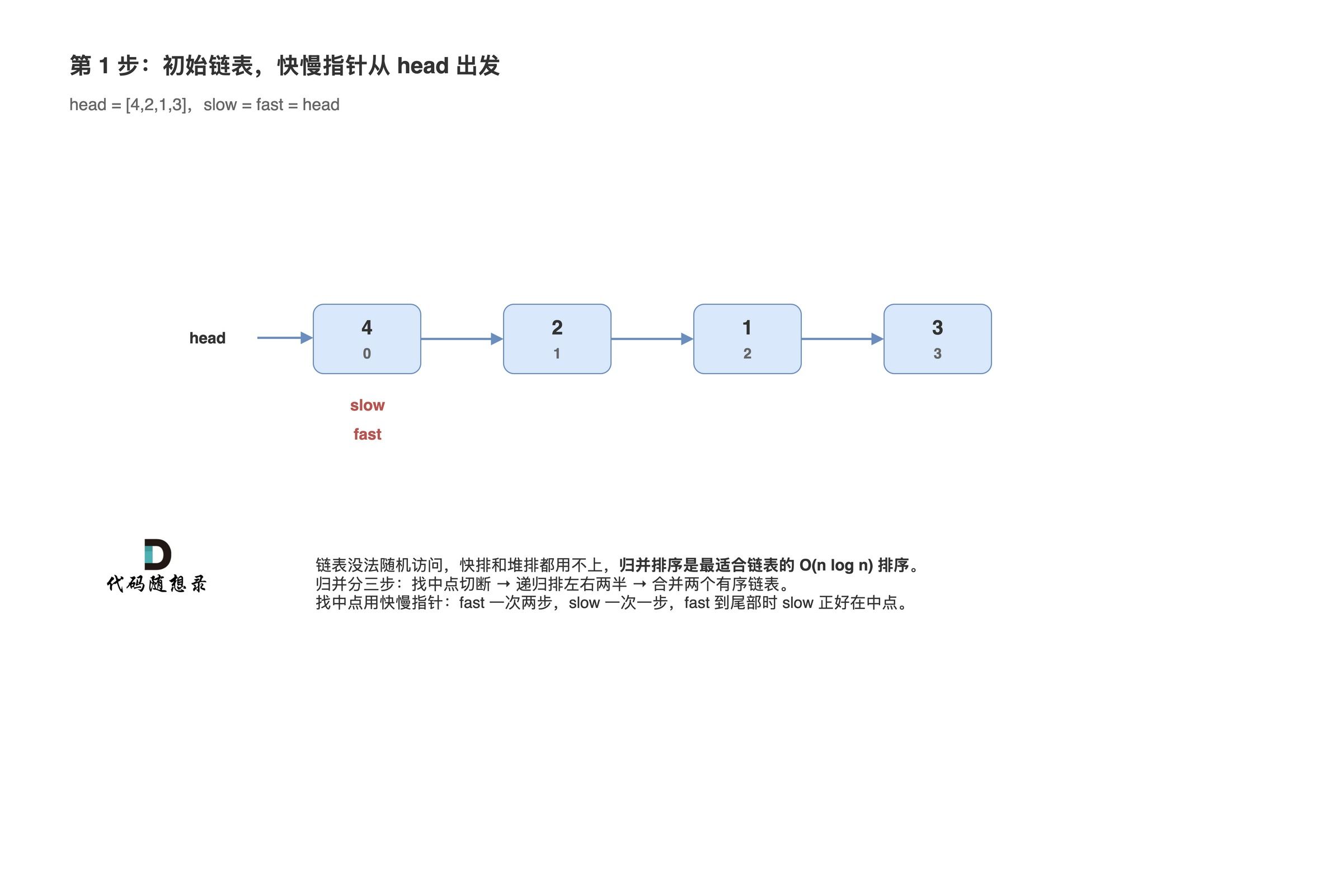
第一次分割:找到中点 2 和 1 之间,分成 [4,2] 和 [1,3]
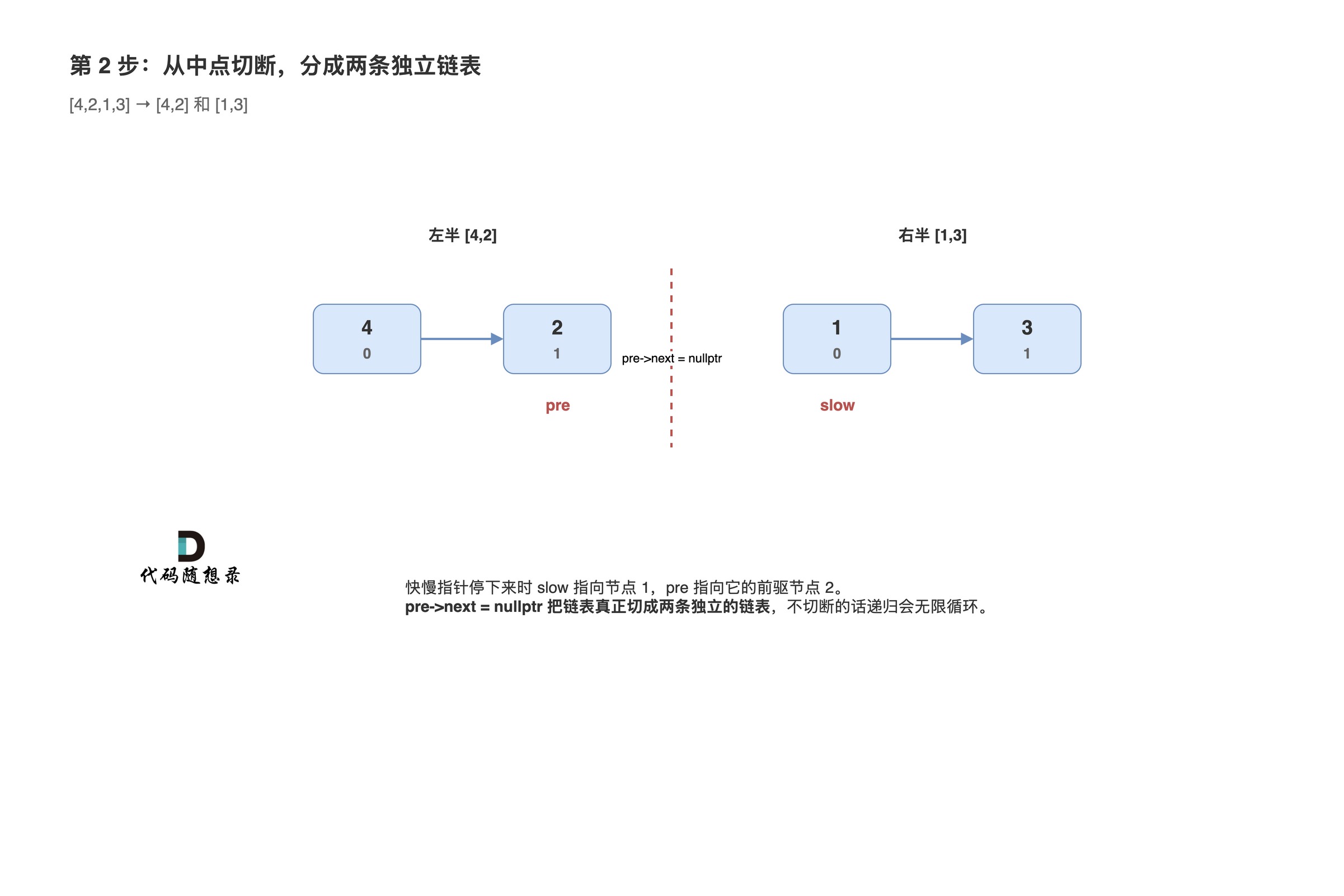
继续分割 [4,2]:分成 [4] 和 [2]
继续分割 [1,3]:分成 [1] 和 [3]
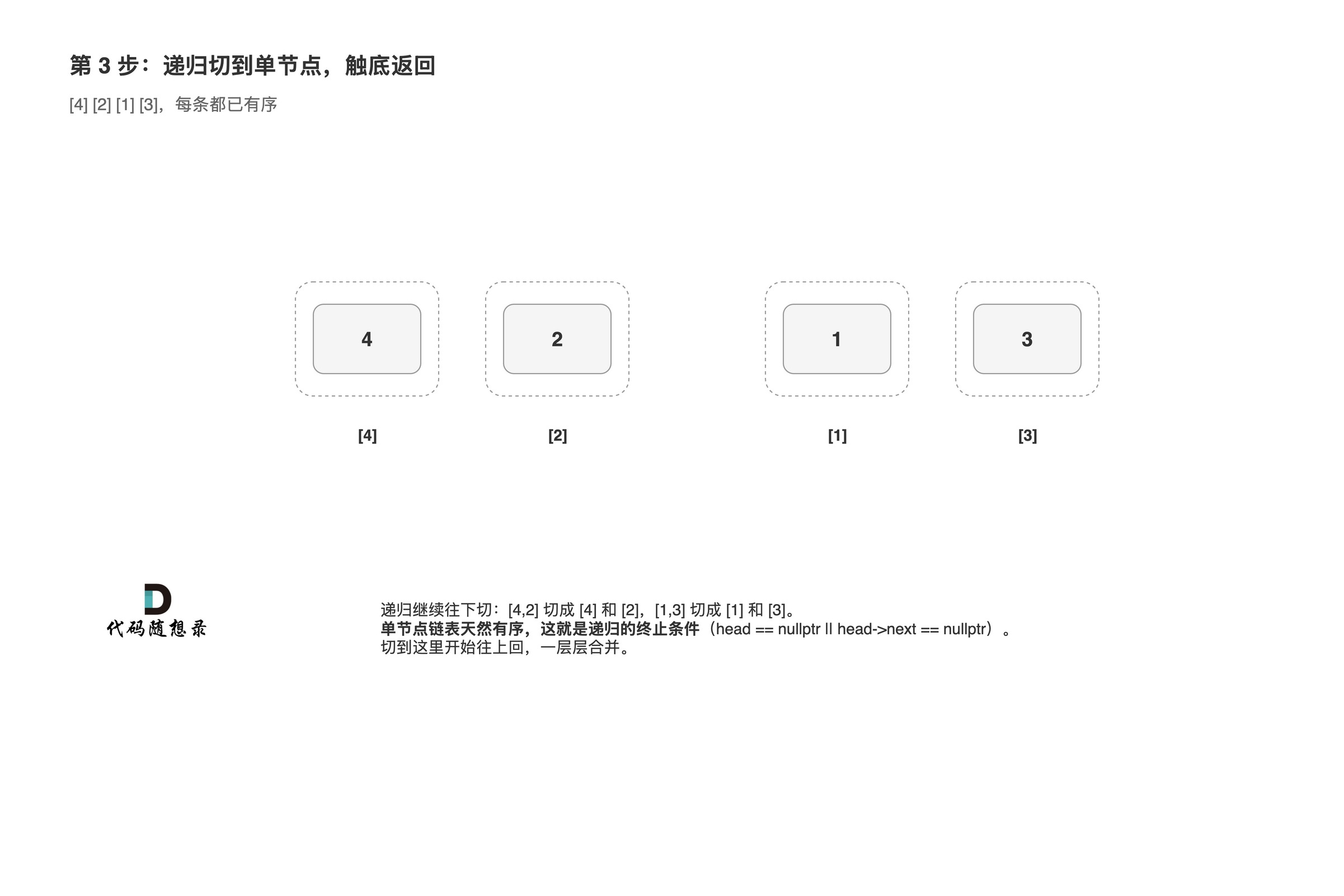
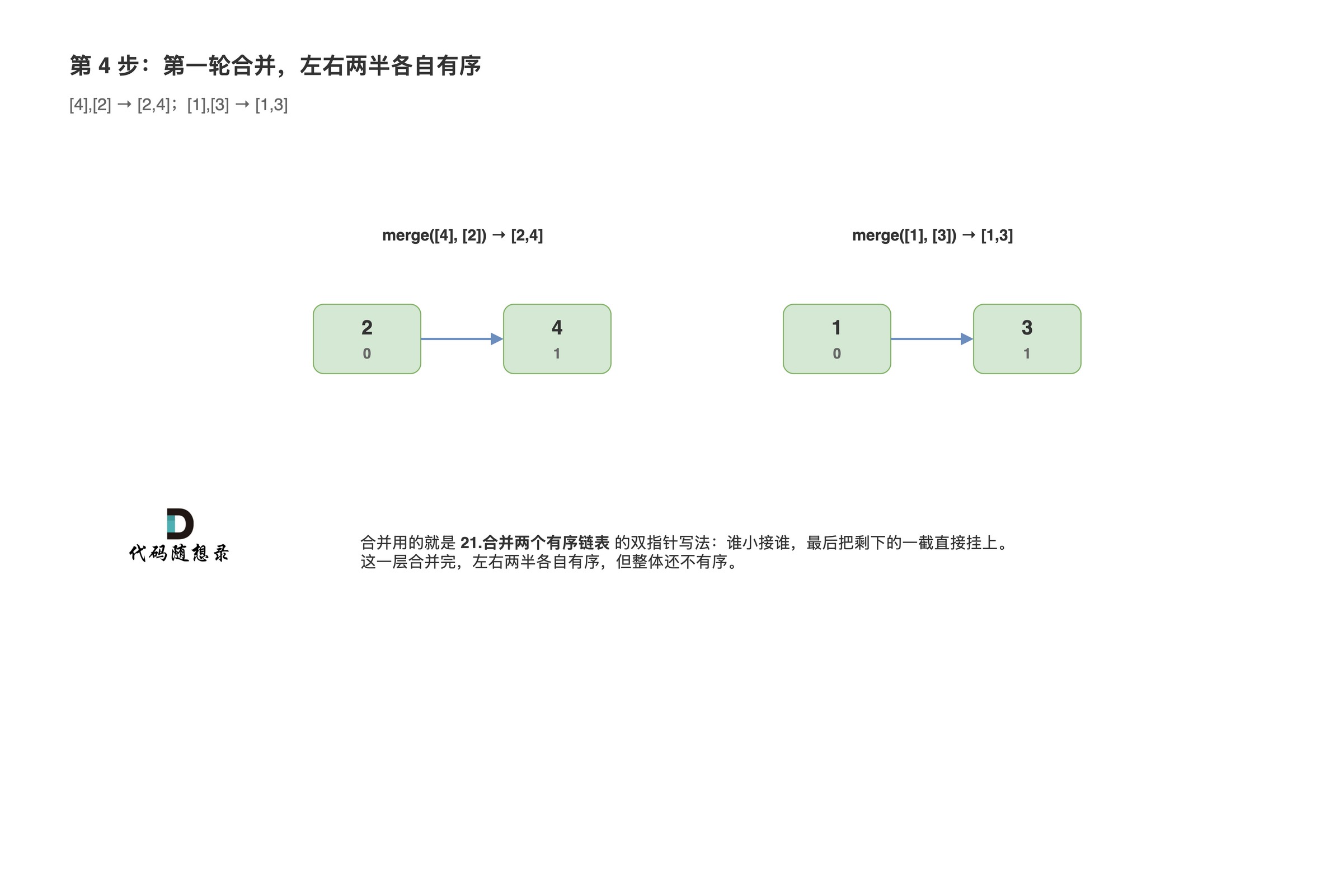
合并 [4] 和 [2]:得到 [2,4]
合并 [1] 和 [3]:得到 [1,3]
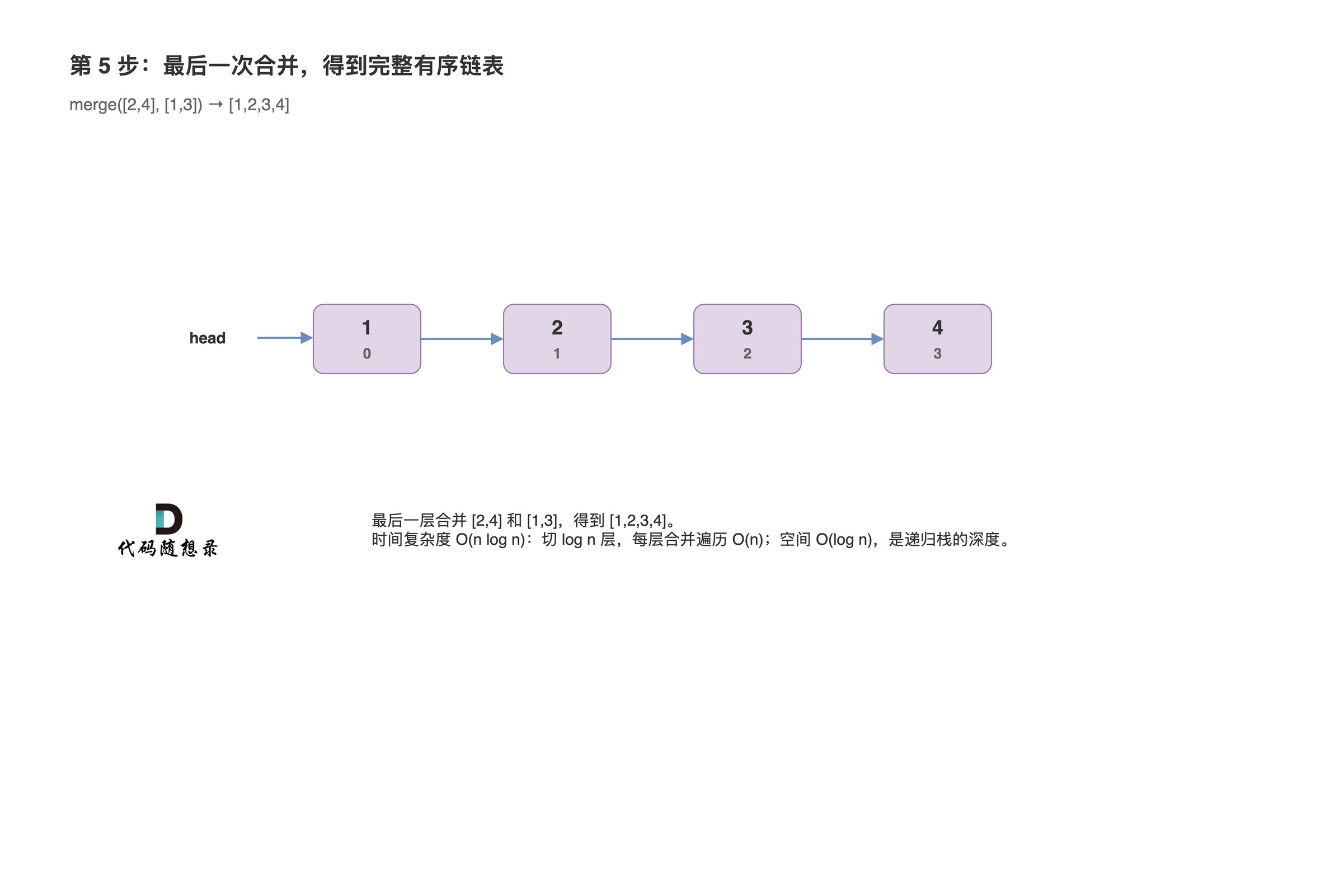
最后合并 [2,4] 和 [1,3]:得到 [1,2,3,4]
# 解题代码
class Solution {
public:
    ListNode* sortList(ListNode* head) {
        // 递归终止条件:空链表或单节点链表已经有序
        if (head == nullptr || head->next == nullptr) {
            return head;
        }

        // 快慢指针找中点
        ListNode* slow = head;
        ListNode* fast = head;
        ListNode* pre = nullptr; // 记录慢指针的前一个节点,用于切断链表

        while (fast != nullptr && fast->next != nullptr) {
            pre = slow;
            slow = slow->next;
            fast = fast->next->next;
        }

        pre->next = nullptr; // 从中点切断链表

        // 递归排序左右两半
        ListNode* left = sortList(head);
        ListNode* right = sortList(slow);

        // 合并两个有序链表
        return merge(left, right);
    }

private:
    // 合并两个有序链表
    ListNode* merge(ListNode* l1, ListNode* l2) {
        ListNode* dummyHead = new ListNode(0);
        ListNode* cur = dummyHead;

        while (l1 != nullptr && l2 != nullptr) {
            if (l1->val <= l2->val) {
                cur->next = l1;
                l1 = l1->next;
            } else {
                cur->next = l2;
                l2 = l2->next;
            }
            cur = cur->next;
        }

        // 连接剩余节点
        cur->next = (l1 != nullptr) ? l1 : l2;

        return dummyHead->next;
    }
};
1
2
3
4
5
6
7
8
9
10
11
12
13
14
15
16
17
18
19
20
21
22
23
24
25
26
27
28
29
30
31
32
33
34
35
36
37
38
39
40
41
42
43
44
45
46
47
48
49
50
51
52
2
3
4
5
6
7
8
9
10
11
12
13
14
15
16
17
18
19
20
21
22
23
24
25
26
27
28
29
30
31
32
33
34
35
36
37
38
39
40
41
42
43
44
45
46
47
48
49
50
51
52
# 复杂度分析
- 时间复杂度:O(n log n),归并排序的标准复杂度
- 空间复杂度:O(log n),递归调用栈的深度
# 其他语言
# Python3
class Solution:
    def sortList(self, head: Optional[ListNode]) -> Optional[ListNode]:
        # 递归终止条件
        if not head or not head.next:
            return head

        # 快慢指针找中点
        slow, fast = head, head
        pre = None

        while fast and fast.next:
            pre = slow
            slow = slow.next
            fast = fast.next.next

        pre.next = None  # 切断链表

        # 递归排序
        left = self.sortList(head)
        right = self.sortList(slow)

        # 合并
        return self.merge(left, right)

    def merge(self, l1: Optional[ListNode], l2: Optional[ListNode]) -> Optional[ListNode]:
        dummy = ListNode(0)
        cur = dummy

        while l1 and l2:
            if l1.val <= l2.val:
                cur.next = l1
                l1 = l1.next
            else:
                cur.next = l2
                l2 = l2.next
            cur = cur.next

        cur.next = l1 if l1 else l2
        return dummy.next
1
2
3
4
5
6
7
8
9
10
11
12
13
14
15
16
17
18
19
20
21
22
23
24
25
26
27
28
29
30
31
32
33
34
35
36
37
38
39
2
3
4
5
6
7
8
9
10
11
12
13
14
15
16
17
18
19
20
21
22
23
24
25
26
27
28
29
30
31
32
33
34
35
36
37
38
39
# Java
class Solution {
    public ListNode sortList(ListNode head) {
        if (head == null || head.next == null) {
            return head;
        }

        // 快慢指针找中点
        ListNode slow = head, fast = head;
        ListNode pre = null;

        while (fast != null && fast.next != null) {
            pre = slow;
            slow = slow.next;
            fast = fast.next.next;
        }

        pre.next = null; // 切断链表

        // 递归排序
        ListNode left = sortList(head);
        ListNode right = sortList(slow);

        return merge(left, right);
    }

    private ListNode merge(ListNode l1, ListNode l2) {
        ListNode dummy = new ListNode(0);
        ListNode cur = dummy;

        while (l1 != null && l2 != null) {
            if (l1.val <= l2.val) {
                cur.next = l1;
                l1 = l1.next;
            } else {
                cur.next = l2;
                l2 = l2.next;
            }
            cur = cur.next;
        }

        cur.next = (l1 != null) ? l1 : l2;
        return dummy.next;
    }
}
1
2
3
4
5
6
7
8
9
10
11
12
13
14
15
16
17
18
19
20
21
22
23
24
25
26
27
28
29
30
31
32
33
34
35
36
37
38
39
40
41
42
43
44
2
3
4
5
6
7
8
9
10
11
12
13
14
15
16
17
18
19
20
21
22
23
24
25
26
27
28
29
30
31
32
33
34
35
36
37
38
39
40
41
42
43
44
# Go
func sortList(head *ListNode) *ListNode {
    if head == nil || head.Next == nil {
        return head
    }

    // 快慢指针找中点
    slow, fast := head, head
    var pre *ListNode

    for fast != nil && fast.Next != nil {
        pre = slow
        slow = slow.Next
        fast = fast.Next.Next
    }

    pre.Next = nil // 切断链表

    // 递归排序
    left := sortList(head)
    right := sortList(slow)

    return merge(left, right)
}

func merge(l1, l2 *ListNode) *ListNode {
    dummy := &ListNode{}
    cur := dummy

    for l1 != nil && l2 != nil {
        if l1.Val <= l2.Val {
            cur.Next = l1
            l1 = l1.Next
        } else {
            cur.Next = l2
            l2 = l2.Next
        }
        cur = cur.Next
    }

    if l1 != nil {
        cur.Next = l1
    } else {
        cur.Next = l2
    }

    return dummy.Next
}
1
2
3
4
5
6
7
8
9
10
11
12
13
14
15
16
17
18
19
20
21
22
23
24
25
26
27
28
29
30
31
32
33
34
35
36
37
38
39
40
41
42
43
44
45
46
47
2
3
4
5
6
7
8
9
10
11
12
13
14
15
16
17
18
19
20
21
22
23
24
25
26
27
28
29
30
31
32
33
34
35
36
37
38
39
40
41
42
43
44
45
46
47
# JS
var sortList = function(head) {
    if (!head || !head.next) {
        return head;
    }

    // 快慢指针找中点
    let slow = head, fast = head;
    let pre = null;

    while (fast && fast.next) {
        pre = slow;
        slow = slow.next;
        fast = fast.next.next;
    }

    pre.next = null; // 切断链表

    // 递归排序
    const left = sortList(head);
    const right = sortList(slow);

    return merge(left, right);
};

function merge(l1, l2) {
    const dummy = new ListNode(0);
    let cur = dummy;

    while (l1 && l2) {
        if (l1.val <= l2.val) {
            cur.next = l1;
            l1 = l1.next;
        } else {
            cur.next = l2;
            l2 = l2.next;
        }
        cur = cur.next;
    }

    cur.next = l1 || l2;
    return dummy.next;
}
1
2
3
4
5
6
7
8
9
10
11
12
13
14
15
16
17
18
19
20
21
22
23
24
25
26
27
28
29
30
31
32
33
34
35
36
37
38
39
40
41
42
2
3
4
5
6
7
8
9
10
11
12
13
14
15
16
17
18
19
20
21
22
23
24
25
26
27
28
29
30
31
32
33
34
35
36
37
38
39
40
41
42
# 与代码随想录联系
这道题综合了多个链表基本操作:
- 快慢指针找中点 — 这个技巧在 141.环形链表 和 142.环形链表 II 中详细讲过
- 合并两个有序链表 — 在 21.合并两个有序链表 中是独立题目
- 分治递归思想 — 在代码随想录回溯章节有详细讲解
建议录友们先把这些基础题目理解透彻,再来做本题会轻松很多。
归并排序是为数不多适合链表的 O(n log n) 排序算法,面试中如果考察链表排序,基本就是这个思路。
@2021-2026 代码随想录 版权所有
粤ICP备19156078号
评论
验证登录状态...