
# 994. 腐烂的橘子
# 题目描述
在给定的 m × n 网格 grid 中,每个单元格可以有以下三个值之一:
0表示单元格为空;1表示单元格中有一个新鲜橘子;2表示单元格中有一个腐烂的橘子。
每分钟,腐烂橘子周围四个方向上相邻的新鲜橘子都会腐烂。返回直到单元格中没有新鲜橘子为止所必须经过的最小分钟数。如果不可能,返回 -1。
示例 1:
输入:grid = [[2,1,1],[1,1,0],[0,1,1]]
输出:4
2
示例 2:
输入:grid = [[2,1,1],[0,1,1],[1,0,1]]
输出:-1
解释:左下角的新鲜橘子永远不会腐烂。
2
3
示例 3:
输入:grid = [[0,2]]
输出:0
2
提示:
1 <= m, n <= 10grid[i][j]只能是0、1或2
# 思路
看到“最少经过多少分钟”,很容易想到 BFS,因为 BFS 按距离一层一层向外扩散。
但本题和普通 BFS 有一点不同:网格里可能一开始就有多个腐烂橘子,它们会在同一分钟同时扩散。
如果从每个腐烂橘子分别做一次 BFS,会有什么问题?同一块区域会被重复搜索,而且很难正确合并各自的时间。
正确做法是:先把所有腐烂橘子一起放进队列,把它们当成 BFS 的第 0 层。 这就是多源 BFS。
同时统计新鲜橘子的数量 fresh:
- 初始化时,所有值为 2 的位置入队,所有值为 1 的位置计入
fresh; - 队列中的当前一层代表同一分钟开始时已经腐烂的橘子;
- 它们让相邻新鲜橘子腐烂,新腐烂的橘子进入下一层,
fresh减一; - 只要本轮确实腐烂了新橘子,分钟数才加一;
- BFS 结束后,如果
fresh > 0,说明有橘子被空格隔开,返回-1。
为什么不能每处理一个橘子就让时间加一?因为同一层的所有橘子是在同一分钟同时扩散,时间对应的是 BFS 层数,不是出队次数。
# 模拟过程
为了把“多源”看清楚,图中使用一个包含两个初始腐烂橘子的网格:
2 1 1 1 2
1 1 0 1 1
0 1 1 1 0
2
3
初始化时,左上角和右上角两个腐烂橘子一起进入 Q0。第 1 分钟只处理 Q0 中的两个源点,它们新腐烂的四个位置组成 Q1;第 2 分钟再只处理 Q1,新腐烂的位置组成 Q2。队列就这样按层推进。
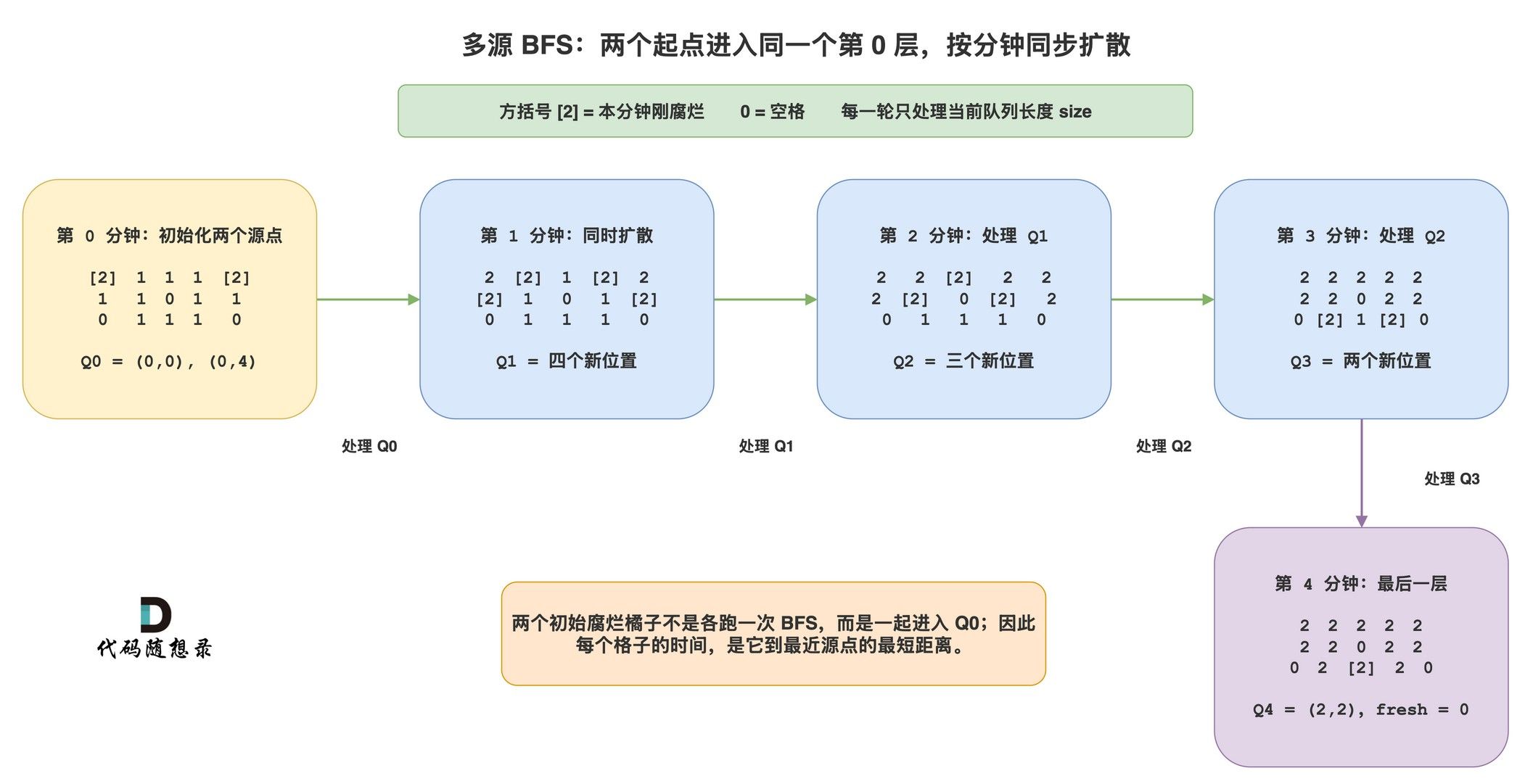
图中方括号 [2] 表示当前分钟刚腐烂、即将进入下一层队列的位置。扩散到第 4 层时,最后一个新鲜橘子变腐烂,所以答案是 4。
注意,这不是从两个源点分别做两次 BFS,而是把所有源点放进同一个第 0 层。这样每个格子第一次被访问时的层数,就是它到最近源点的最短距离。
# 解题代码
class Solution {
public:
    int orangesRotting(vector<vector<int>>& grid) {
        queue<pair<int, int>> rotten;
        int fresh = 0;

        for (int i = 0; i < grid.size(); ++i) {
            for (int j = 0; j < grid[0].size(); ++j) {
                if (grid[i][j] == 2) rotten.push({i, j});
                else if (grid[i][j] == 1) ++fresh;
            }
        }

        int minutes = 0;
        int directions[4][2] = {{-1, 0}, {0, 1}, {1, 0}, {0, -1}};

        while (!rotten.empty() && fresh > 0) {
            int size = rotten.size();
            ++minutes; // 当前这一层统一扩散一分钟

            while (size--) {
                auto [x, y] = rotten.front();
                rotten.pop();

                for (auto& direction : directions) {
                    int nextX = x + direction[0];
                    int nextY = y + direction[1];
                    if (nextX < 0 || nextX >= grid.size() ||
                        nextY < 0 || nextY >= grid[0].size() ||
                        grid[nextX][nextY] != 1) {
                        continue;
                    }
                    grid[nextX][nextY] = 2; // 入队时标记,避免重复入队
                    --fresh;
                    rotten.push({nextX, nextY});
                }
            }
        }

        return fresh == 0 ? minutes : -1;
    }
};
2
3
4
5
6
7
8
9
10
11
12
13
14
15
16
17
18
19
20
21
22
23
24
25
26
27
28
29
30
31
32
33
34
35
36
37
38
39
40
41
42
# 复杂度分析
- 时间复杂度:O(m × n),每个单元格最多入队一次。
- 空间复杂度:O(m × n),最坏情况下队列保存 O(m × n) 个位置。
# 其他语言
# Python3
from collections import deque

class Solution:
    def orangesRotting(self, grid):
        rows, cols = len(grid), len(grid[0])
        queue, fresh = deque(), 0
        for i in range(rows):
            for j in range(cols):
                if grid[i][j] == 2:
                    queue.append((i, j))
                elif grid[i][j] == 1:
                    fresh += 1

        minutes = 0
        while queue and fresh > 0:
            for _ in range(len(queue)):
                x, y = queue.popleft()
                for dx, dy in ((-1, 0), (0, 1), (1, 0), (0, -1)):
                    nx, ny = x + dx, y + dy
                    if 0 <= nx < rows and 0 <= ny < cols and grid[nx][ny] == 1:
                        grid[nx][ny] = 2
                        fresh -= 1
                        queue.append((nx, ny))
            minutes += 1
        return minutes if fresh == 0 else -1
2
3
4
5
6
7
8
9
10
11
12
13
14
15
16
17
18
19
20
21
22
23
24
25
# Java
class Solution {
    public int orangesRotting(int[][] grid) {
        Queue<int[]> queue = new ArrayDeque<>();
        int fresh = 0;
        for (int i = 0; i < grid.length; i++) {
            for (int j = 0; j < grid[0].length; j++) {
                if (grid[i][j] == 2) queue.offer(new int[]{i, j});
                else if (grid[i][j] == 1) fresh++;
            }
        }

        int minutes = 0;
        int[][] directions = {{-1, 0}, {0, 1}, {1, 0}, {0, -1}};
        while (!queue.isEmpty() && fresh > 0) {
            int size = queue.size();
            minutes++;
            while (size-- > 0) {
                int[] current = queue.poll();
                for (int[] direction : directions) {
                    int x = current[0] + direction[0];
                    int y = current[1] + direction[1];
                    if (x < 0 || x >= grid.length || y < 0 || y >= grid[0].length || grid[x][y] != 1) continue;
                    grid[x][y] = 2;
                    fresh--;
                    queue.offer(new int[]{x, y});
                }
            }
        }
        return fresh == 0 ? minutes : -1;
    }
}
2
3
4
5
6
7
8
9
10
11
12
13
14
15
16
17
18
19
20
21
22
23
24
25
26
27
28
29
30
31
# Go
func orangesRotting(grid [][]int) int {
    queue, fresh := [][2]int{}, 0
    for i := range grid {
        for j := range grid[0] {
            if grid[i][j] == 2 { queue = append(queue, [2]int{i, j}) }
            if grid[i][j] == 1 { fresh++ }
        }
    }

    minutes := 0
    directions := [][2]int{{-1, 0}, {0, 1}, {1, 0}, {0, -1}}
    for len(queue) > 0 && fresh > 0 {
        size := len(queue)
        minutes++
        for i := 0; i < size; i++ {
            current := queue[0]
            queue = queue[1:]
            for _, direction := range directions {
                x, y := current[0]+direction[0], current[1]+direction[1]
                if x < 0 || x >= len(grid) || y < 0 || y >= len(grid[0]) || grid[x][y] != 1 { continue }
                grid[x][y] = 2
                fresh--
                queue = append(queue, [2]int{x, y})
            }
        }
    }
    if fresh > 0 { return -1 }
    return minutes
}
2
3
4
5
6
7
8
9
10
11
12
13
14
15
16
17
18
19
20
21
22
23
24
25
26
27
28
29
# JS
var orangesRotting = function(grid) {
    const rows = grid.length, cols = grid[0].length;
    const queue = [];
    let fresh = 0, front = 0;

    for (let i = 0; i < rows; i++) {
        for (let j = 0; j < cols; j++) {
            if (grid[i][j] === 2) queue.push([i, j]);
            else if (grid[i][j] === 1) fresh++;
        }
    }

    let minutes = 0;
    const directions = [[-1, 0], [0, 1], [1, 0], [0, -1]];
    while (front < queue.length && fresh > 0) {
        const levelEnd = queue.length;
        minutes++;
        while (front < levelEnd) {
            const [x, y] = queue[front++];
            for (const [dx, dy] of directions) {
                const nx = x + dx, ny = y + dy;
                if (nx < 0 || nx >= rows || ny < 0 || ny >= cols || grid[nx][ny] !== 1) continue;
                grid[nx][ny] = 2;
                fresh--;
                queue.push([nx, ny]);
            }
        }
    }
    return fresh === 0 ? minutes : -1;
};
2
3
4
5
6
7
8
9
10
11
12
13
14
15
16
17
18
19
20
21
22
23
24
25
26
27
28
29
30
# 与代码随想录联系
本题是多源 BFS 的典型应用。建议先看广度优先搜索理论基础,理解队列为什么能够保证按距离分层访问。
再对比200.岛屿数量:200 题关心连通分量个数,遇到一个新起点就搜索一次;本题关心所有起点到其他位置的最短时间,所以要把多个起点同时放进一个队列。
评论
验证登录状态...