
# 42. 接雨水
# 题目描述
给定 n 个非负整数表示每个宽度为 1 的柱子的高度图,计算按此排列的柱子,下雨之后能接多少雨水。
示例 1:
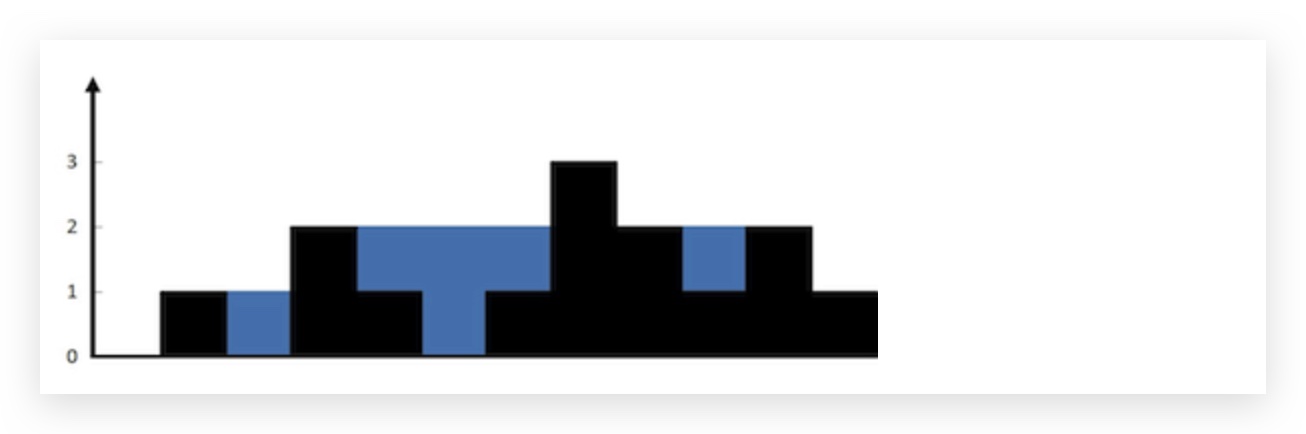
输入:height = [0,1,0,2,1,0,1,3,2,1,2,1]
输出:6
解释:上面是由数组表示的高度图,可以接 6 个单位的雨水。
2
3
示例 2:
输入:height = [4,2,0,3,2,5]
输出:9
2
提示:
n == height.length1 <= n <= 2 * 10^40 <= height[i] <= 10^5
# 思路
接雨水这道题,到底应该按行计算,还是按列计算?
按行计算需要不断寻找一层水的左右边界,代码容易绕。按列计算更直观:宽度固定为 1,只需要求出每一列上方能接多高的水。
# 一列能接多少水
对于下标 i,它上方的雨水高度取决于:
- 左侧最高柱子
leftMax - 右侧最高柱子
rightMax - 当前柱子高度
height[i]
真正能装水的高度由较矮的边界决定:
当前列雨水 = min(leftMax, rightMax) - height[i]
例如某一列高度为 1,左侧最高柱子是 2,右侧最高柱子是 3,那么这一列能接:
min(2, 3) - 1 = 1
最直观的写法,是遍历每一列,再分别向左、向右寻找最高柱子。这样每一列都要扫描数组,时间复杂度是 O(n²)。
可以提前用两个数组记录每个位置的 leftMax 和 rightMax,把时间复杂度降到 O(n),但需要 O(n) 的额外空间。
还能不能继续优化空间?
# 双指针为什么可行
我们让 left、right 分别从数组两端向中间移动,同时维护:
leftMax:从左端到left位置见过的最高柱子rightMax:从右端到right位置见过的最高柱子
关键问题来了:每一步应该计算左边的柱子,还是右边的柱子?
如果 leftMax < rightMax,对于 left 这一列:
- 左侧最高柱子已经确定为
leftMax - 右侧至少存在一根高度为
rightMax的柱子 - 因为
rightMax更高,所以这一列的水位一定由leftMax决定
此时不需要知道右侧还有没有更高的柱子,left 这一列的雨水已经可以确定:
leftMax - height[left]
计算完成后,left 向右移动。
同理,如果 leftMax >= rightMax,右侧较矮,right 这一列的雨水由 rightMax 决定:
rightMax - height[right]
计算完成后,right 向左移动。
哪一侧的最高边界更矮,就计算哪一侧,并移动哪一侧的指针。
由于 leftMax 和 rightMax 都包含当前柱子的高度,所以相减结果不会小于 0,不需要额外判断。
代码中遇到两侧最高边界相等时选择处理右侧。其实处理任意一侧都可以,只要整段逻辑保持一致。
# 模拟过程
以 height = [0,1,0,2,1,0,1,3,2,1,2,1] 为例。
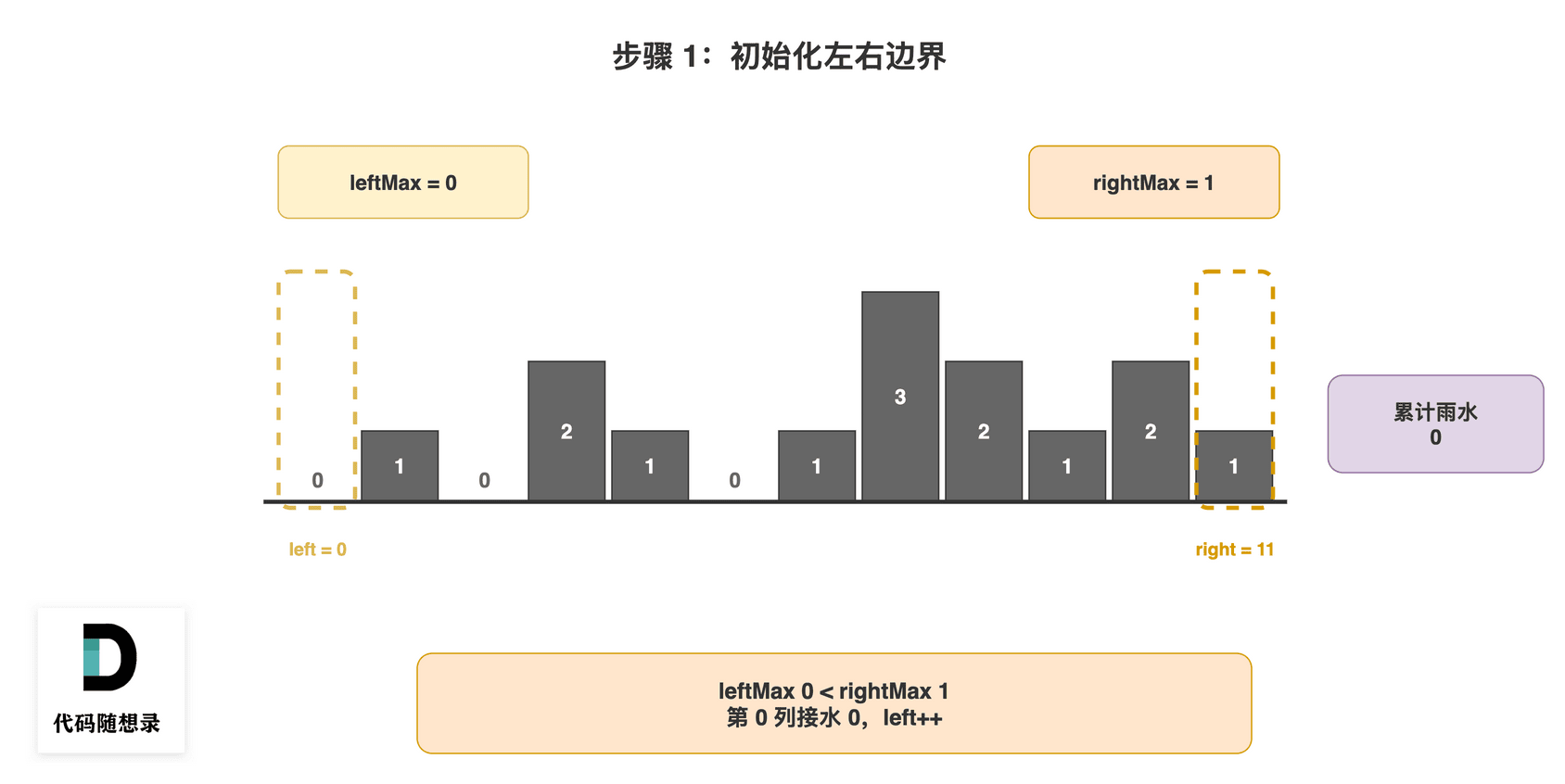
初始化 left = 0、right = 11,更新得到 leftMax = 0、rightMax = 1。左侧边界更矮,所以第 0 列的雨水为 0 - 0 = 0,然后 left++。
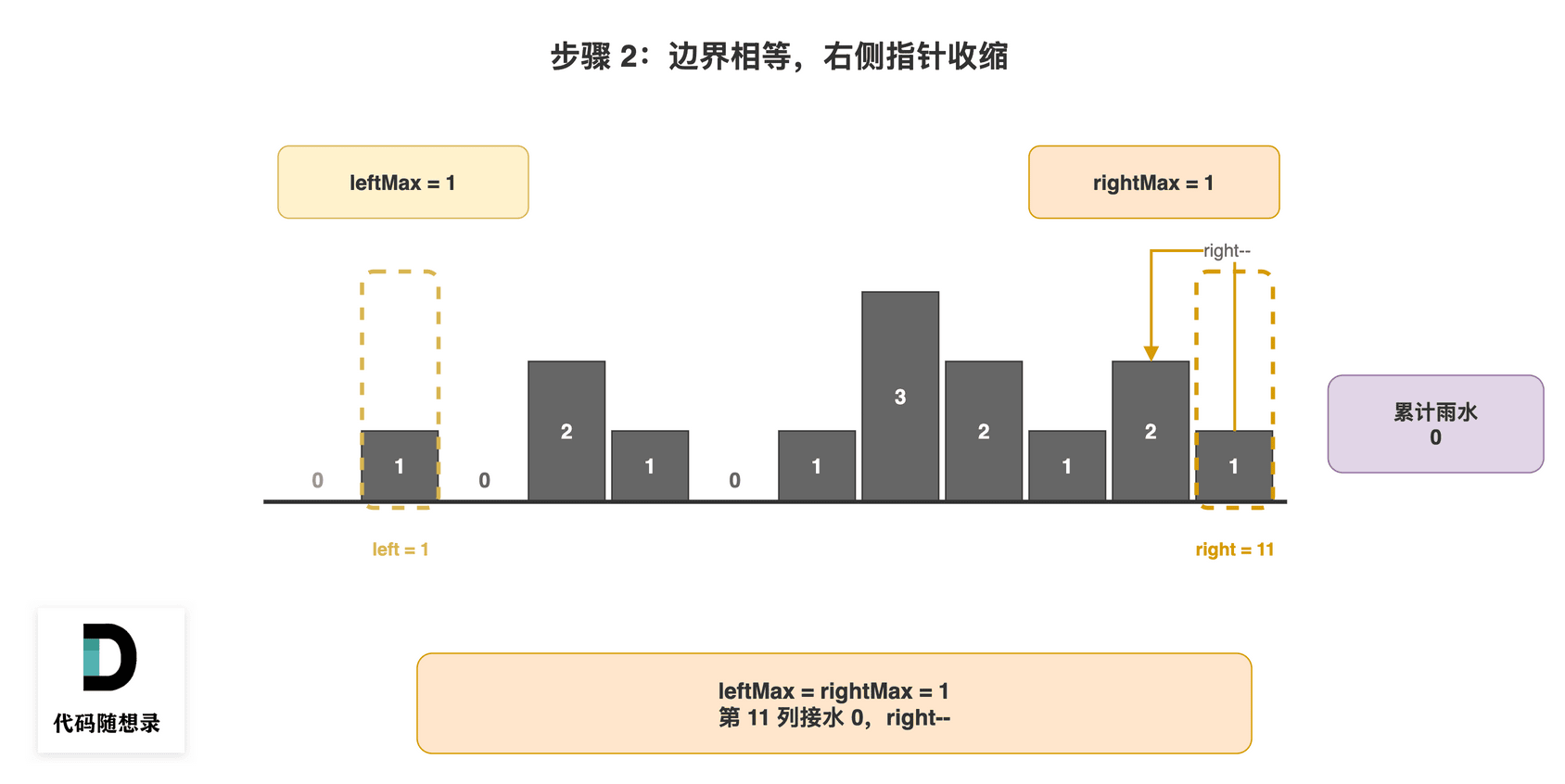
此时 leftMax = 1、rightMax = 1。两侧边界相等,代码选择处理右侧:第 11 列雨水为 1 - 1 = 0,然后 right--。继续更新后,rightMax 变为 2。
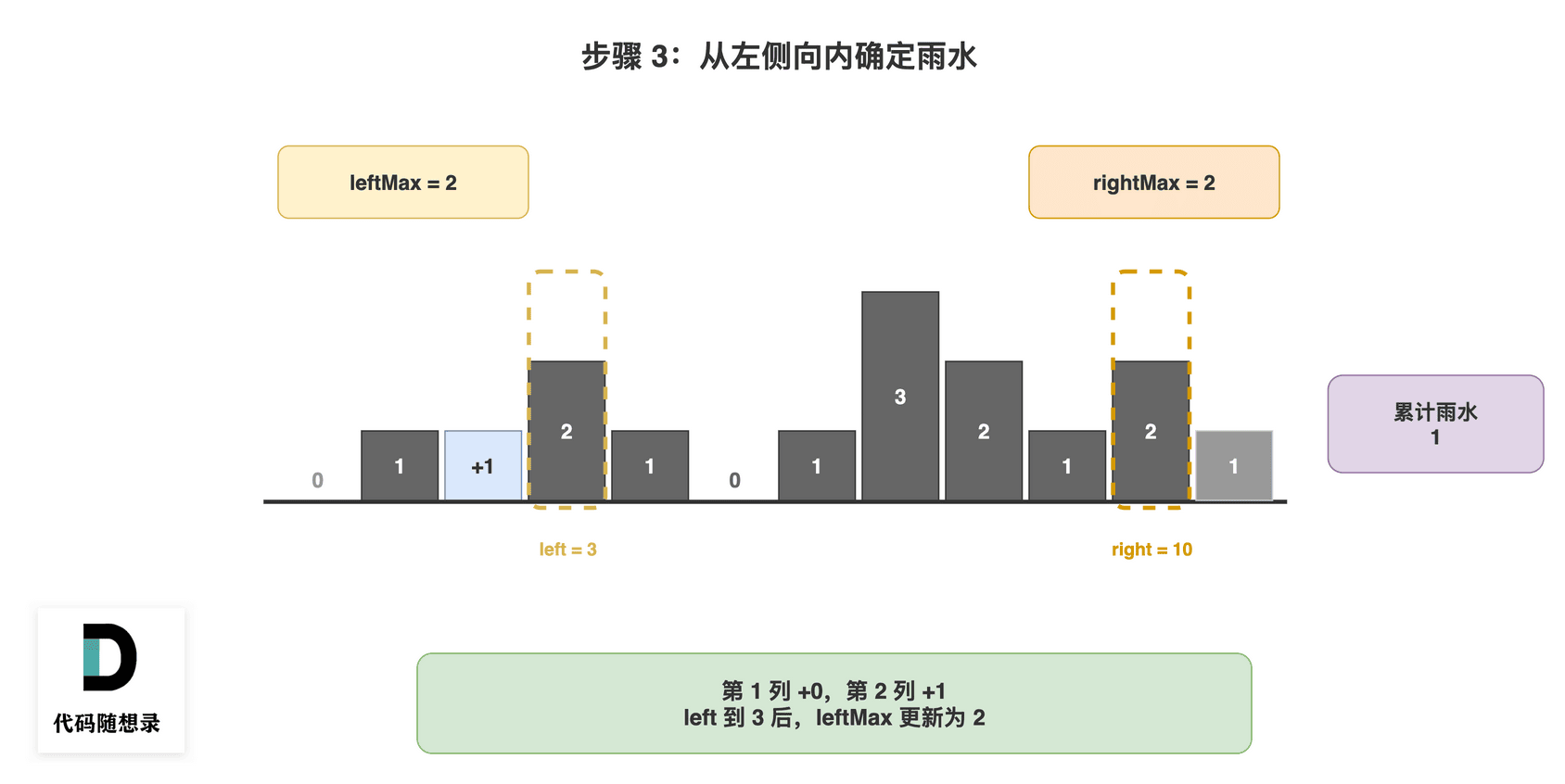
现在 leftMax = 1 < rightMax = 2,左侧水位已经确定:
- 第
1列接水1 - 1 = 0 - 第
2列接水1 - 0 = 1
累计雨水量变为 1,left 移动到下标 3,此时 leftMax 更新为 2。
两侧最高边界再次相等,代码从右侧向内计算:
- 第
10列接水2 - 2 = 0 - 第
9列接水2 - 1 = 1 - 第
8列接水2 - 2 = 0
累计雨水量变为 2。right 移动到下标 7 后,rightMax 更新为 3。
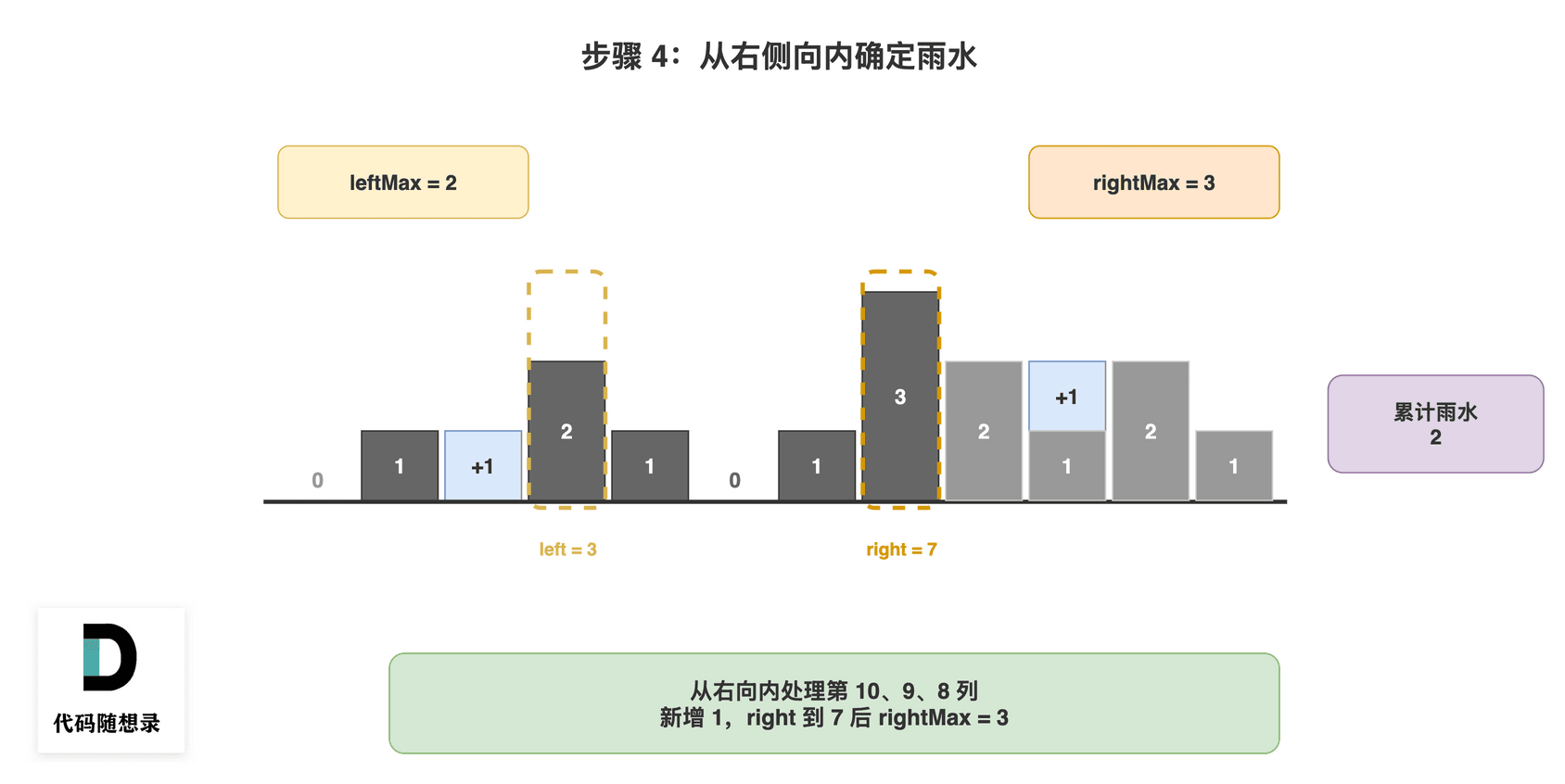
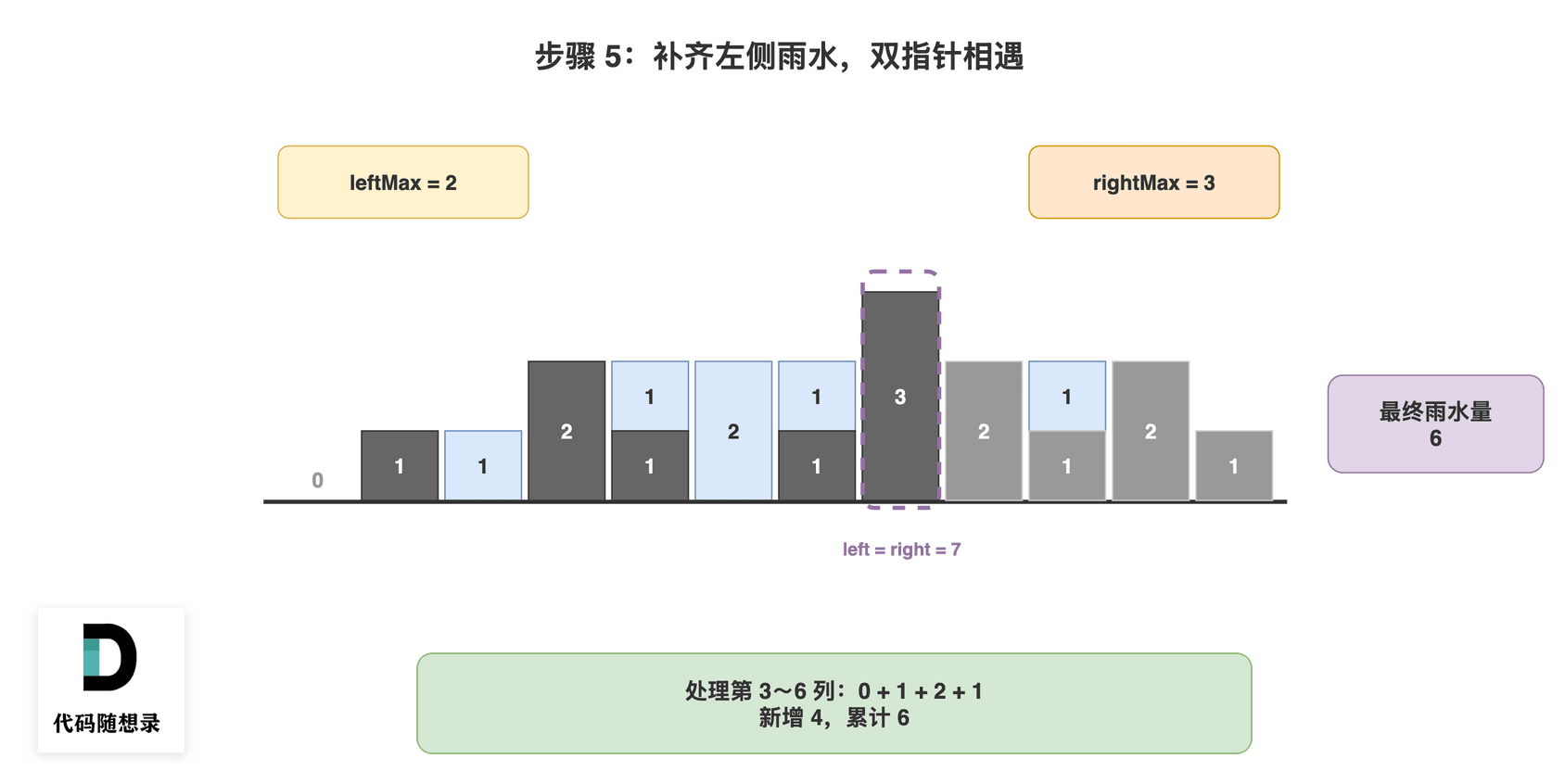
接下来 leftMax = 2 < rightMax = 3,依次计算左侧剩余位置:
- 第
3列接水0 - 第
4列接水1 - 第
5列接水2 - 第
6列接水1
本轮增加 4 个单位,最终累计雨水量为 6。此时 left 与 right 在下标 7 相遇,循环结束。
# 解题代码
class Solution {
public:
    int trap(vector<int>& height) {
        int left = 0;
        int right = height.size() - 1;
        int leftMax = 0;
        int rightMax = 0;
        int result = 0;

        while (left < right) {
            leftMax = max(leftMax, height[left]);
            rightMax = max(rightMax, height[right]);

            if (leftMax < rightMax) {
                // 左边界更矮,当前左列的水位已经确定
                result += leftMax - height[left];
                left++;
            } else {
                // 右边界更矮或相等,当前右列的水位已经确定
                result += rightMax - height[right];
                right--;
            }
        }

        return result;
    }
};
2
3
4
5
6
7
8
9
10
11
12
13
14
15
16
17
18
19
20
21
22
23
24
25
26
27
# 复杂度分析
- 时间复杂度:O(n)。左右指针各自只遍历数组一次。
- 空间复杂度:O(1)。只使用常数个变量。
# 其他语言
# Python3
class Solution:
    def trap(self, height: List[int]) -> int:
        left, right = 0, len(height) - 1
        left_max = right_max = 0
        result = 0

        while left < right:
            left_max = max(left_max, height[left])
            right_max = max(right_max, height[right])

            if left_max < right_max:
                # 左边界更矮,当前左列的水位已经确定
                result += left_max - height[left]
                left += 1
            else:
                # 右边界更矮或相等,当前右列的水位已经确定
                result += right_max - height[right]
                right -= 1

        return result
2
3
4
5
6
7
8
9
10
11
12
13
14
15
16
17
18
19
20
# Java
class Solution {
    public int trap(int[] height) {
        int left = 0;
        int right = height.length - 1;
        int leftMax = 0;
        int rightMax = 0;
        int result = 0;

        while (left < right) {
            leftMax = Math.max(leftMax, height[left]);
            rightMax = Math.max(rightMax, height[right]);

            if (leftMax < rightMax) {
                // 左边界更矮,当前左列的水位已经确定
                result += leftMax - height[left];
                left++;
            } else {
                // 右边界更矮或相等,当前右列的水位已经确定
                result += rightMax - height[right];
                right--;
            }
        }

        return result;
    }
}
2
3
4
5
6
7
8
9
10
11
12
13
14
15
16
17
18
19
20
21
22
23
24
25
26
# Go
func trap(height []int) int {
    left, right := 0, len(height)-1
    leftMax, rightMax := 0, 0
    result := 0

    for left < right {
        if height[left] > leftMax {
            leftMax = height[left]
        }
        if height[right] > rightMax {
            rightMax = height[right]
        }

        if leftMax < rightMax {
            // 左边界更矮,当前左列的水位已经确定
            result += leftMax - height[left]
            left++
        } else {
            // 右边界更矮或相等,当前右列的水位已经确定
            result += rightMax - height[right]
            right--
        }
    }

    return result
}
2
3
4
5
6
7
8
9
10
11
12
13
14
15
16
17
18
19
20
21
22
23
24
25
26
# JS
var trap = function(height) {
    let left = 0;
    let right = height.length - 1;
    let leftMax = 0;
    let rightMax = 0;
    let result = 0;

    while (left < right) {
        leftMax = Math.max(leftMax, height[left]);
        rightMax = Math.max(rightMax, height[right]);

        if (leftMax < rightMax) {
            // 左边界更矮,当前左列的水位已经确定
            result += leftMax - height[left];
            left++;
        } else {
            // 右边界更矮或相等,当前右列的水位已经确定
            result += rightMax - height[right];
            right--;
        }
    }

    return result;
};
2
3
4
5
6
7
8
9
10
11
12
13
14
15
16
17
18
19
20
21
22
23
24
# 与代码随想录联系
我在代码随想录的42. 接雨水中,从按列暴力计算、前后缀最高数组,一直讲到单调栈按行计算雨水。
Hot100 这里重点掌握双指针:哪一侧的最高边界更矮,就确定哪一侧的雨水。
和本题相关的内容:
- 11. 盛最多水的容器——同样从两端向中间移动,但求的是一个容器的最大面积
- 单调栈专题——从按列计算切换到按行计算,理解凹槽的高度和宽度
- 双指针学习路线——系统掌握数组与链表中的双指针题型
评论
验证登录状态...